PLP Redesign - Adams Education Platform
I led the redesign of the PLP within the ADAMS e-commerce education platform.
Product Design
Project Overview
Client: Adams
Industry: E-commerce
My Role: Product Designer & Accessibility Consultant
Adams was at a stage of product evolution and needed to rethink the browsing experience of its digital catalog. The PLP had to become a clearer, more flexible, and scalable experience capable of supporting different types of content, courses, and services across the platform.
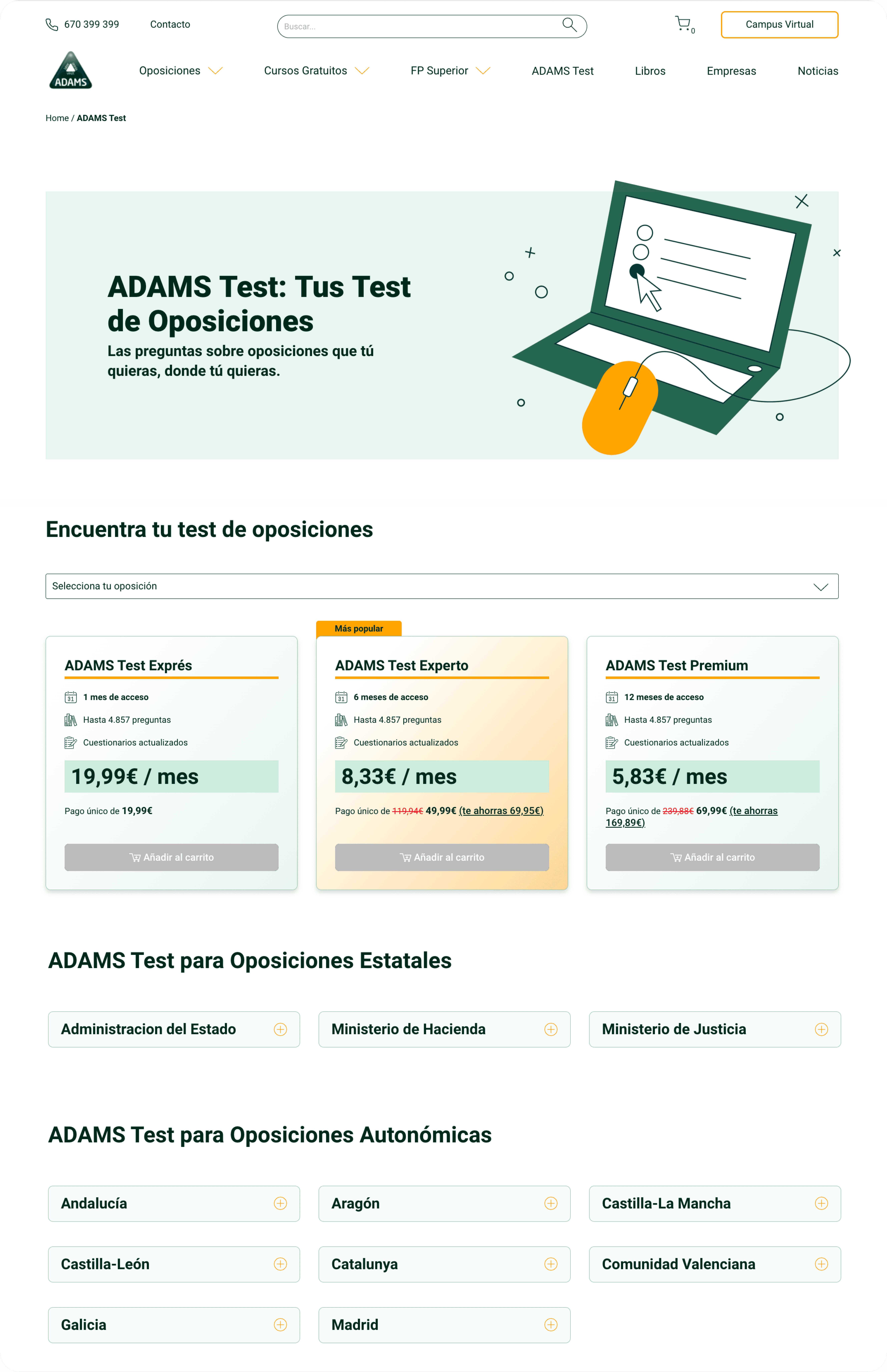
The previous version had grown organically over time, resulting in navigation issues, visual inconsistencies, and difficulties discovering relevant content.
As part of a team of four designers, my responsibility was to lead the redesign of the PLP and help define a new exploration experience aligned with the product’s evolving needs.
My role
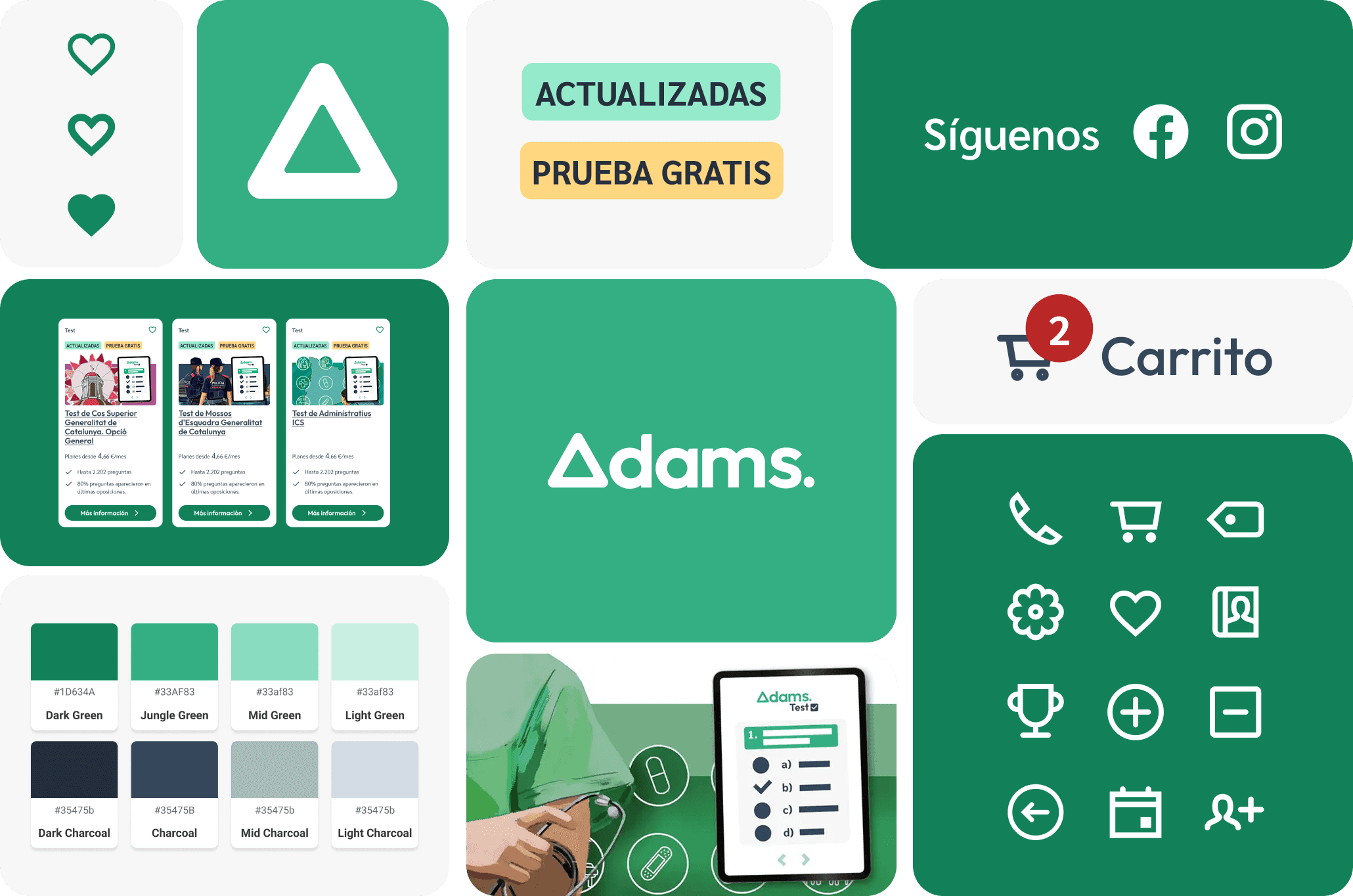
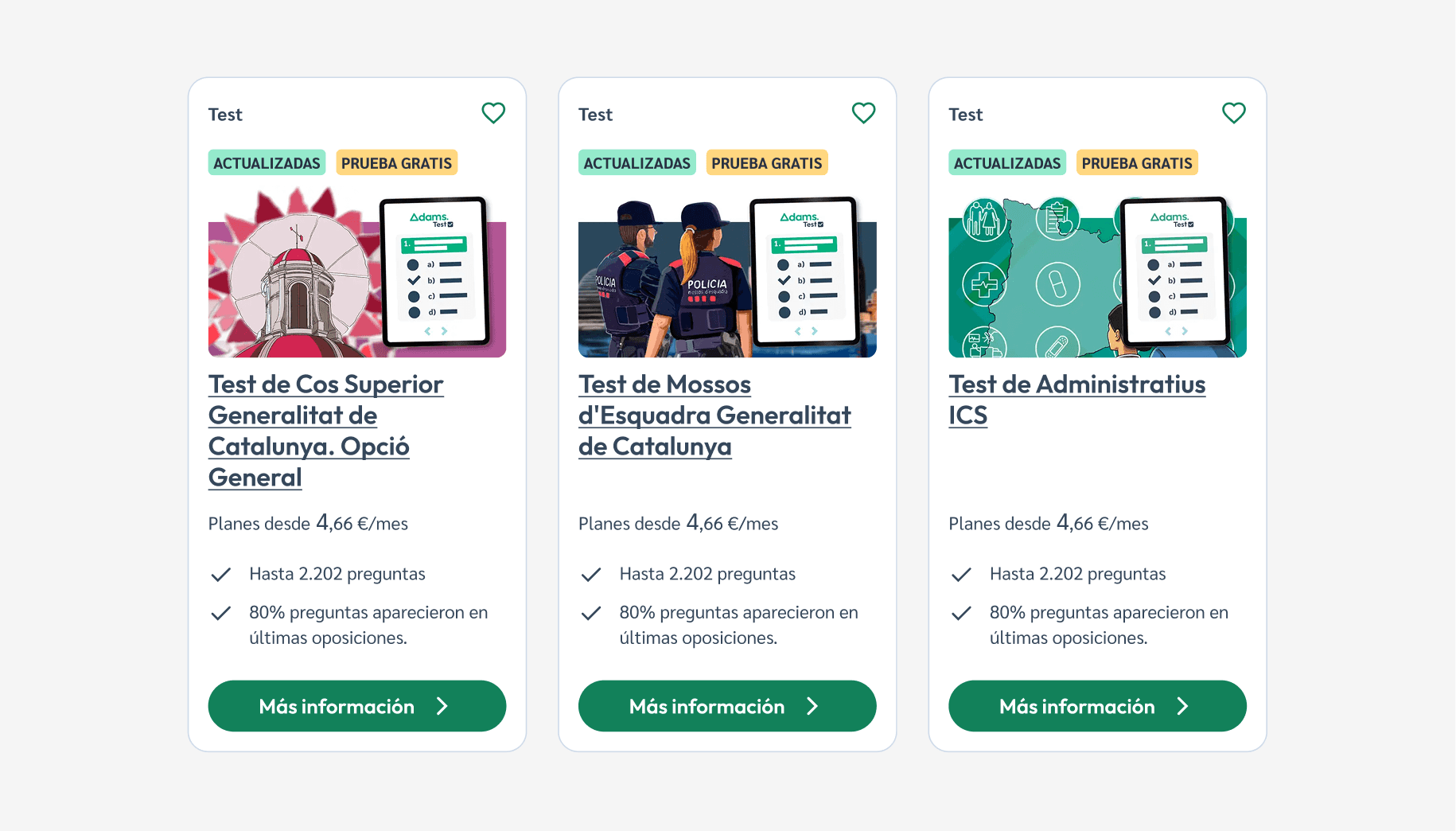
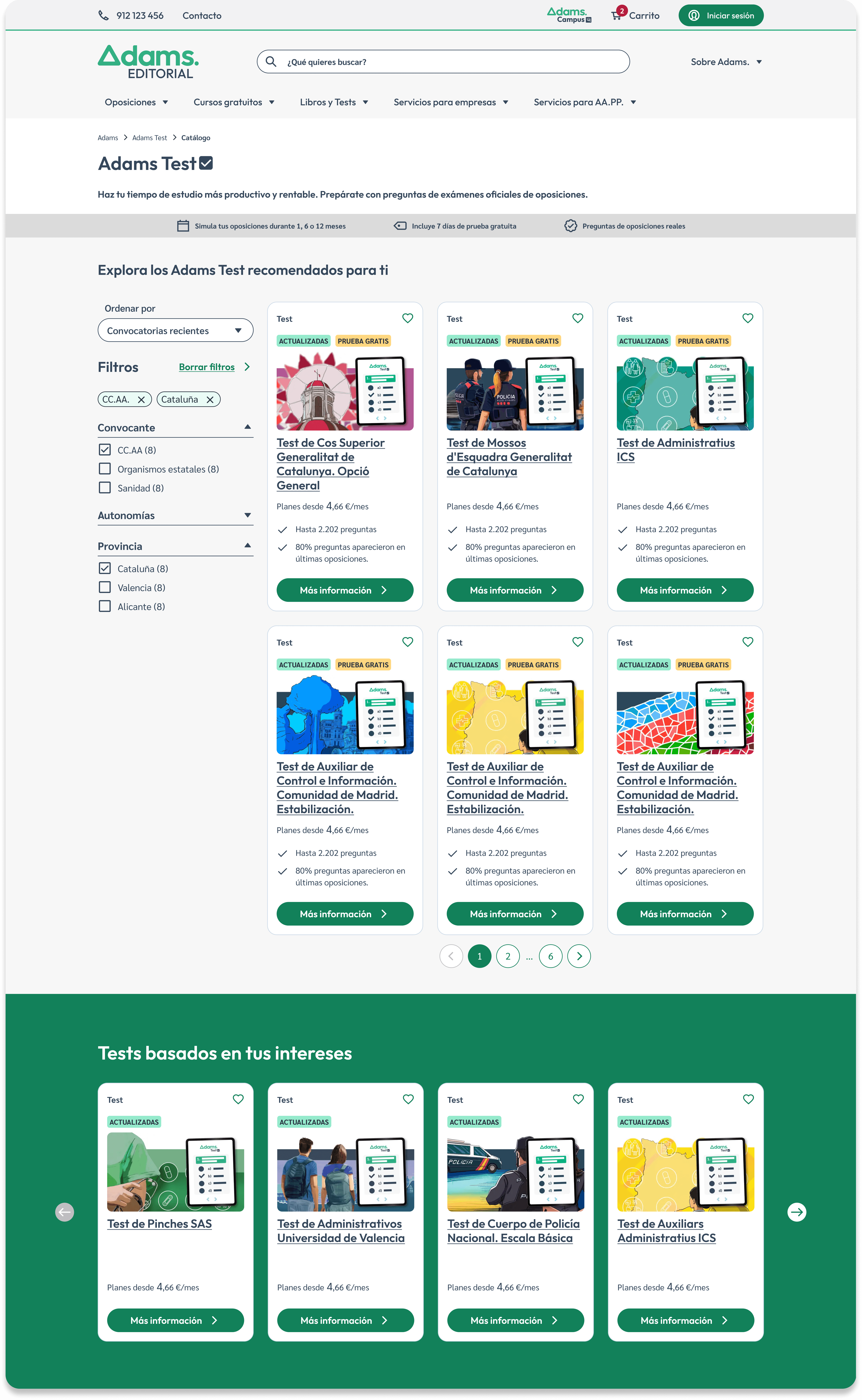
Within the design team, I was mainly responsible for the complete redesign of the PLP and the definition of a new visual structure that was clearer and more scalable. I worked on reorganizing the information architecture, designing the filtering and navigation system, and creating new product cards focused on improving exploration and fast content scanning.
Beyond the PLP redesign, I also actively contributed to improving the accessibility of the Design System alongside the rest of the team. I collaborated on reviewing components, contrast ratios, visual hierarchies, and interaction patterns to help build a more inclusive and consistent experience across the platform.
I also worked closely with product and engineering teams to ensure that the proposed solutions were aligned with the design system and sustainable in the long term.
The challenge
The challenge was not only to modernize the interface, but to reorganize a complex experience containing a large amount of information and multiple content categories.
We identified several key problems:
Unclear visual hierarchy.
Difficulty finding relevant content quickly.
Rigid and non-scalable structure.
Lack of consistency across components.
Limited filtering experience.
Additionally, the PLP needed to support multiple product types without losing clarity or consistency.
Previous design
The Approach
The main goal was to design a simpler, more flexible, and user-centered experience.
To achieve this, we focused on three main pillars:
1. Improving navigation and discovery
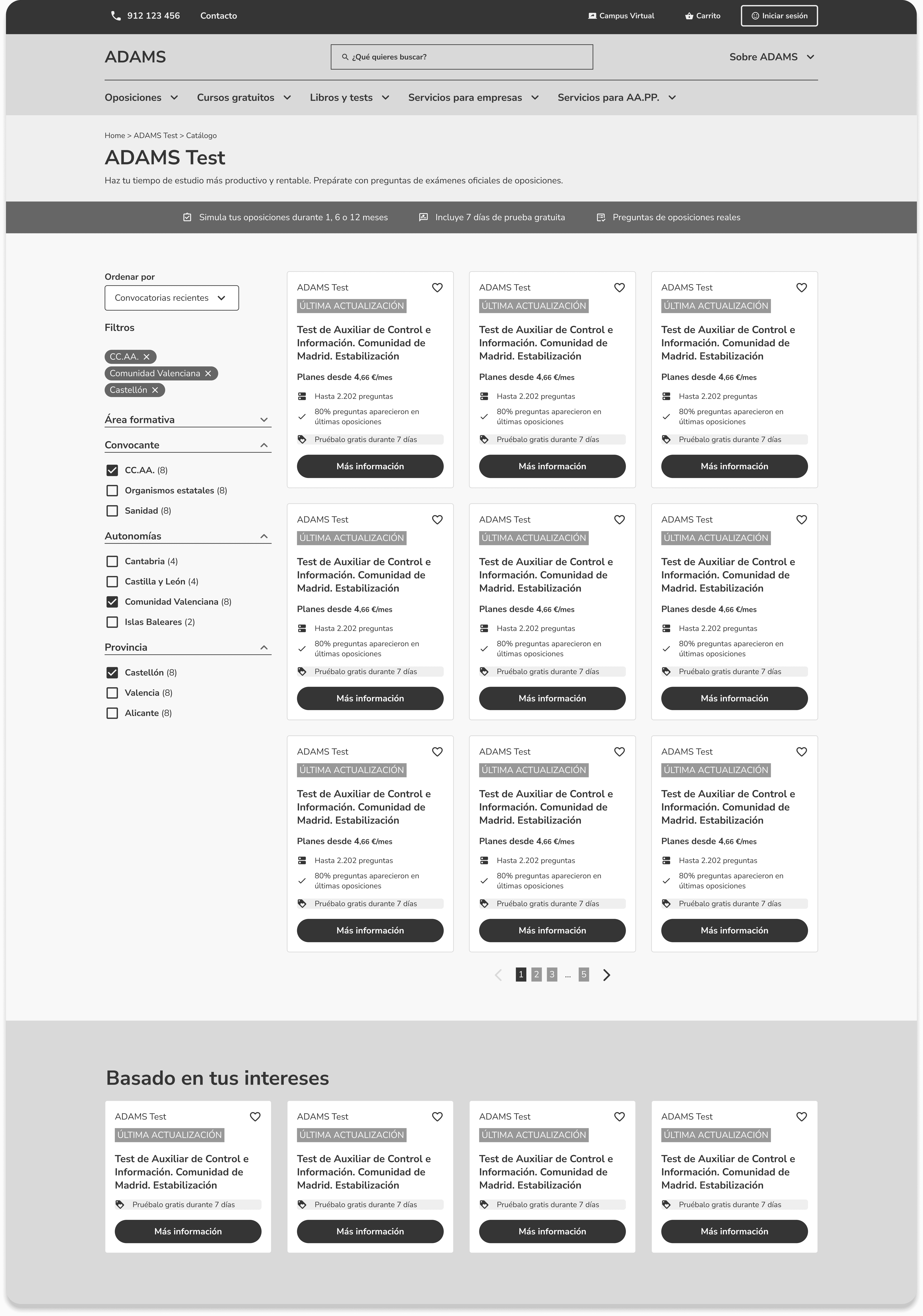
We redesigned the page structure to make catalog exploration easier and reduce cognitive load.
The new PLP introduced:
Persistent filters,
More visible sorting systems,
Clearer categories,
Modular structure that helps users find content faster.
Wireframe Lo-fi
2. Rethinking Visual Hierarchy
One of the main focuses was improving scanability across the interface.
I redesigned the cards and content distribution to prioritize:
the most relevant information,
visual states,
primary actions,
and faster content consumption.
The use of spacing, typography, and consistent components helped create a cleaner and more balanced experience.
3. Designing a Scalable PLP
The new structure needed to work not only for the present, but also for the future growth of the platform.
For that reason, we focused on:
Reusable components,
Consistent patterns,
Flexible architecture,
And an experience capable of adapting to new content types and categories.
Results
The redesign transformed a fragmented experience into a much clearer, more modern, and scalable navigation system.
The new PLP:
Improves catalog exploration,
Makes relevant content easier to find,
Reduces visual complexity,
And brings consistency across the experience.
Additionally, the new component system established a much stronger foundation for future product evolution.
Learnings
This project allowed me to deepen my understanding of designing complex catalog experiences while balancing visual clarity, scalability, and business needs. Working on a transversal PLP that supported multiple content types helped me better understand the importance of building flexible and reusable systems capable of evolving alongside the product without losing consistency.
It also reinforced the importance of accessibility within design systems and how small visual and interaction decisions can significantly improve the experience for different types of users.
Finally, collaborating closely with designers, product managers, and engineers was key to making more sustainable decisions aligned with the real needs of the platform.